No Rules, New Rules, One Rule

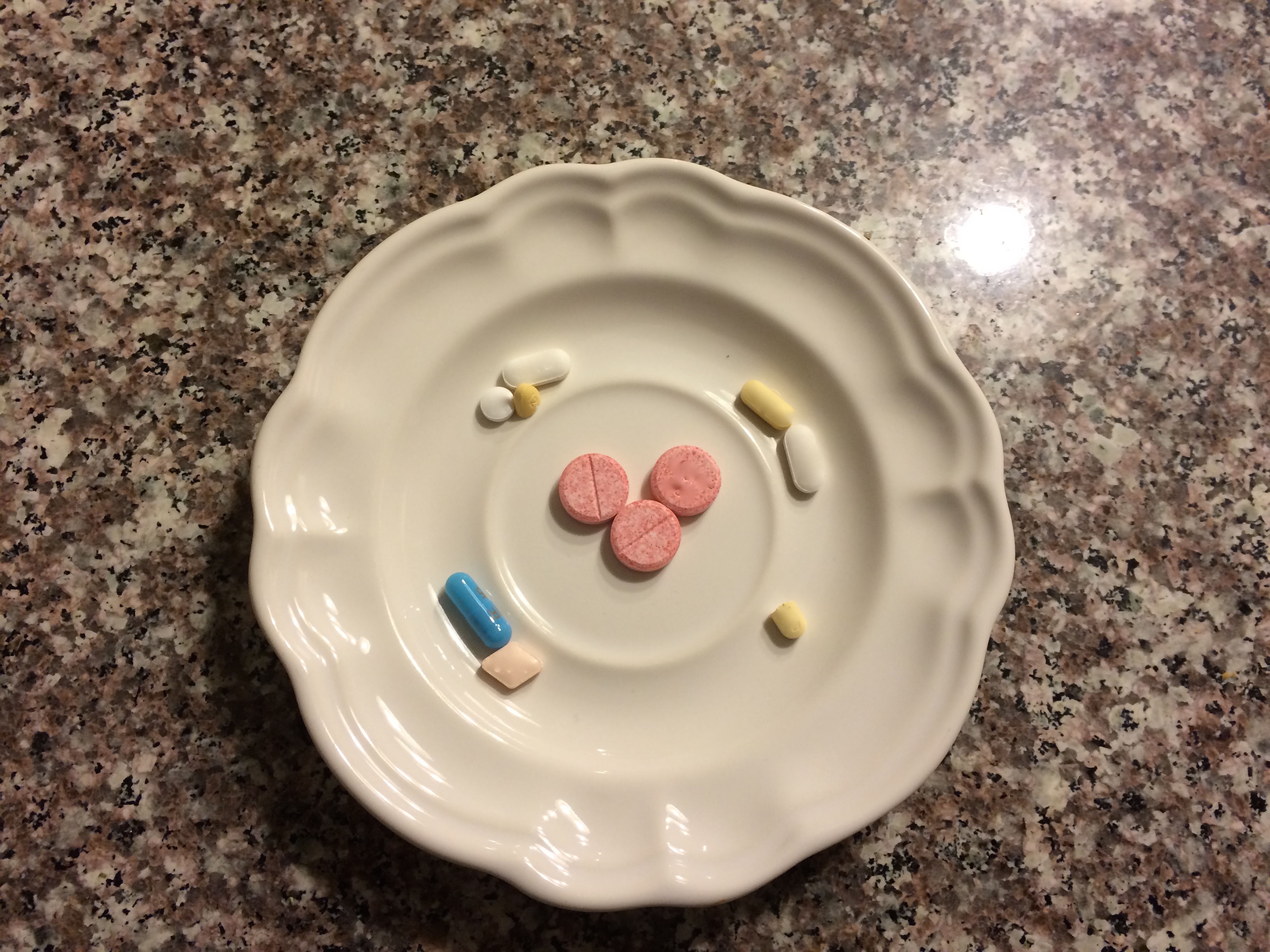
IMGP4810

So last night, the Fourth of July, held a minor victory as our oldest kid did pretty well facing his fear of fireworks. All the kids did pretty well, in fact, with each one showing a little more improvement in the sensory processing realm. Plus, they got to stay up later than usual. Mind you, we didn’t go anywhere for fireworks. We’re just talking about the small-time crackers and roman candles that some folks in the neighborhood set off. Still, progress is progress.

Anyway, this morning we ended up paying for the late night and the extra stimulation. As we were trying to get everyone ready for Mass, we were presented with two very strong tantrum-melt downs from two different kids, one stubbornly tired kid who could barely keep his eyes open, and another one exceedingly anxious about the her siblings’ potentially bad behavior in church.

We tried to roll with it. We really did. But after a while we realized that Mass just wasn’t going to work. It was too risky. So we played hooky. Sort of. Rather than go to our local church, which is only a half-mile away, we loaded everyone in the van and drove twenty miles to Mount St. Mary’s University–my alma mater of a Catholic college.

A Mini Pilgrimage.

The van is a safe zone. Each of them can enter their own world, whether by staring out the windows or by putting on their head phones and listening to music or by taking a quick nap. It’s one way to help them press the reset button, and that’s pretty much what happened. By the time we arrived, they were doing better. Not great, but better.

We spent about an hour there, walking the nearly empty campus and visiting the Grotto, which is a replica of the shrine to the Virgin Mary at Lourdes, France. We ended with a visit to the grotto chapel, where I had the kids sit as quietly as possible for as long as possible (5 minutes) and told them to try to pray. Then we read the Gospel reading they would have heard if they had gone to Mass, I said a few words about it, and we left. Nothing big. Nothing dramatic. And no other people around.

The kids did pretty well overall. We did have to deal with some sensory issues and low-level anxiety. And our toe-walker started to complain about pain in his legs from all the uphill walking. But I was glad that they got the message that Sunday is more than just another day. It’s still the Sabbath. It’s still the day that we honor God as a family. They saw that the alternative to missing Mass isn’t a free pass to video games.

A New Rule Book.

I don’t like skipping Mass. I really enjoy the closeness to God that I feel there. And for the most part, I can see how it helps the kids. But as far as I could see, there really wasn’t an alternative.

This is one thing that I’ve learned again and again as an autism parent: you have to learn to live by a different set of rules. It seems that everything we do—from church services to school, to recreation to family gatherings—we do differently. And there are times that we have to throw out even our modified rule book. But that’s okay. Because the only rule that really matters is this: Love and accept your kids where they’re at, and they’ll be more likely to follow where you want to lead them.


Crafting a New Narrative

The Doctor–Stories in the End

We had a dear friend over for dinner a couple of nights ago. I’ve known this woman for nearly thirty-five years, and we have worked together for thirty of those years, both as teachers and in our publishing company. She’s a delightful British woman with a heart of gold. She’s involved with prison ministry, she feeds homeless AIDS victims, and she writes children’s books. She’s also very easy with the kids. Nothing fazes her. And to top it off, she even looks like Julie Andrews!

So why was I getting increasingly eager for the evening to end? And why was I so exhausted after she left?

  • Because I’m unused to people visiting our home. We tend not to have people over because it can feel like so much work.
  • Because Katie and I have let ourselves get so wrapped up in this autism thingy that we can lose track of how to relate to people outside of the “tribe.”
  • Because I caught myself wanting to talk about the kids and their challenges, even when it wasn’t necessary or germane to the conversation, and it took energy to stay on topic.
  • Because, much as Katie and I love this person, we inhabit different worlds, and I don’t know how to “be” in her world any more.

Moving Beyond “Past Performance.”

These are all viable reasons. But the more I thought about it, the more I saw that something else was going on. I saw how I’m always on edge around other people—especially when I’m with two or more of my kids. I’m always worrying about which kid is going to act up next and which unique  aspect of our lives I will have to explain this time. Sensory issues? Social missteps? The “oncoming storm” of a tantrum or melt down? World-class perseveration? So I avoid these situations. I don’t look for opportunities to get together with other people or to get the kids out and about as much as I should. And that’s not good.

The thing is, even though I fear the worst, it’s not a foregone conclusion that something bad will happen. It’s true that when things do go south, they head there with a quickness that can make the head spin. But that’s not always the case.

Thinking about this, I recognized some other assumptions or expectations I have—and not just about visitors. “We can’t all go out to dinner; it’ll get too messy.” “I know that Mass is going to be a disaster this Sunday because so-and-so had a rough week at school.” “Another IEP meeting? What’s going to go wrong this time?”

See what I’m doing? In each of those situations, I’m accepting a negative narrative for our life, and I’m letting that narrative drive my decision. Of course, some of my concerns are justified. Things can get pretty challenging for us. People can (and often do) misunderstand us. School teachers and administrators still have a way of minimizing our kids’ challenges.

So yeah, we’ve got some history to draw from. But just as those investment firm commercials tell you, past performance is not necessarily an indication of future results. And the worst thing I can do is expect bad results. Sure, there are some things I know will cause immediate problems. But a lot of other events and situations inhabit that gray area where the outcome is far from predetermined. The problem is, I’ve been painting that gray area black recently, with the result that our kids aren’t getting the opportunities to develop their social skills and coping mechanisms—not to mention the fun they could be missing out on.

Make It a Good One.

So here’s to branching out. Here’s to taking steps—baby steps at first—toward exposing our kids, and ourselves, to new experiences. It’ll probably be a bumpy ride, but they’re usually the best ones. As The Doctor once told Amy Pond, “We’re all stories in the end. Just make it a good one, eh?” So here’s to changing the narrative so we can make it the best story in the world!

Hope. Faith. Love.

Groovy Love

For those who don’t know, I’m a Catholic, and I take my faith kind of seriously. I also like to laugh at how quirky Catholicism can be at times. Among all the Christian denominations, we have got to be the most precise bunch. It’s likely because of our ties to the Roman Empire. Compared to the Greeks, who tended to be more philosophical and flexible, the ancient Romans were legal-minded sticklers for precision. How else did they manage to conquer the world?

Off the top of my head, I can think of two ways that our Roman roots show up. First, there’s our almost innate desire to define doctrines to the umpteenth decimal point: mortal versus venial sin, degrees of cooperation with evil, specific requirements for fasting, for receiving communion, and all that. Then there are the numbers. So many numbers. Just look at the sevens for an example: seven deadly sins, seven corporal works of mercy, seven spiritual works of mercy, seven sacraments the Seven Founders of the Order of Servites. Then there are the threes: Father, Son, and Spirit; poverty, chastity, and obedience; Scripture, Tradition, and the Magisterium. And, of course: faith, hope, and love.

It’s this last trilogy that struck me today. I recalled how St. Paul talks about faith, hope, and love being the only three gifts of God that last, and how “the greatest of these is love” (1 Corinthians 13:13). And it got me to thinking about how these three virtues are the most important things we need as parents—and doubly so as parents of special-needs children. Forget Doctor Spock. Forget Doctor Phil. Even forget Doctor Who. All those self-help books at Barnes & Noble? Rubbish. All those listicles about parenting on Buzzfeed? Worthless. If you have faith, hope, and love, you’ll do just fine.

And because I’m Catholic, I will now tell you the right order in which you need them. *Clears throat*

Hope.

Every parent begins with this one. A child is born. He is beautiful, innocent, full of promise and potential. We look on this tiny person that is the result of our love, and we are gobsmacked. We have such high hopes for this little baby. Not necessarily that he’ll be an astronaut or a top chef or a CEO—although that would be great. We hope that he’ll grow and flourish and find happiness and love. That she’ll find her own special someone with whom she can make a family of her own. We dream of school plays and soccer tournaments and Christmas trees and family trips. We dream of (and dread) the driving lessons, the first date, the prom, and graduation day. Holding this little blessing in our arms, we can’t help but dream of the future.

Then the child grows up, and we see things that challenge our hope. Perhaps speech is delayed. Maybe he takes far too long to learn how to walk or use the potty. Maybe she doesn’t know how to mingle with her classmates in preschool. Maybe he always cries at the doorbell or any sudden noise. Something’s not quite right, and we worry about the future. Then the word “autism” enters our vocabulary, and we feel hope draining away. What about the prom? What about graduation? What about finding love? Is it all possible?

That’s when we look to . . .

Faith.

It’s faith that keeps our hope alive. Faith in our child’s innate goodness. Faith that he really does want to do well and to succeed. Faith in the team of care providers that we stumblingly assemble to give him every chance at a full and rewarding life—whatever that means. Faith in a God who would never abandon a child of his.

That faith sees us through the melt downs, the tantrums, the tone-deaf schools, and the unthinking or unaware neighbors. It lifts us up when our kid begins to go south, whether because of regression or oppositional behavior or depression or anxiety. It sustains us through the long, wearying days and helps us sleep at night. When hope begins to fade, faith tells us that despite what we are seeing now, better days are ahead. It gives us assurance that what we hope for will come to pass (Hebrews 11:1). It may not look like what we expected, but it will come. And so we press on, fueled by faith, toward that vision that we have hoped for.

But what happens when even faith wavers? What if the child we have worked with, prayed for, fought for, and even clashed with, simply is not making progress? Maybe he can’t overcome the next hurdle, or maybe he just doesn’t want to. Whatever the case, what do you do when hope has dissipated and you can’t place your faith in any of the resources you once relied on?

You still have . . .

Love.

And in the end, you know that’s all you really needed. Your dreams may not be fulfilled. Your doctors and therapists may be at an impasse. Your prayers don’t seem to be working. Nothing is going right, and you don’t know if anything good is on the horizon.

It doesn’t matter. He’s your son. She’s your daughter. And you can’t help but love. Even when you want to throw up your hands in despair, you know that this is your child, and that knowledge brings you back to sanity. It softens your heart, if only just enough to let you take the next step forward.

No matter what happens, love wins out. It may take years, but it will win. Because a child who knows he is loved, no matter what, will always have a glimmer in his heart, and that glimmer will offer some protection, some encouragement, some guidance in the dark days. Just as God looked at us and couldn’t help but love us, even when we felt lost and hopeless, we can’t help but feel love when we look at our children.

So even if he never learns to use the toilet, even if she never speaks a word, even if he ends up living all alone or in your basement, there’s always love. Good old, stubborn love. Because it’s the one thing—the only thing—that will matter in the end.

How I Learned to Love the Drugs

Kids' Meds

Here’s a snippet of a conversation I had yesterday evening with my little girl.

Her: Daddy, why does F take medicine?

Me: It helps him not feel so sad all the time.

Her: Okay, so why does L take medicine?

Me: It helps her focus in school and not be too worried.

Her: Well, what about C? What does his medicine do?

Me: It helps him keep calm in school and at home.

Her: And what about B? He takes medicine too.

Me: His medicine helps him not get too angry.

Her: So when will I start taking medicine?

With an internal sigh, I brushed off her last question and changed the subject. I didn’t have the heart to tell her that we were going to start her on a drug trial in a couple of weeks—to help her deal with her anxiety. I figured she’d have plenty of time to think about it when the trial actually began. Nor did I tell her that her little brother was going to start his own trial around the same time. Again, the less said, the better.

So there it is. By the middle of May, all six of our children will be on some kind of psychotropic medication.

Surprised by Sympathy.

It’s interesting. I shared this little dialogue with a couple of autism parenting support groups I belong to on Facebook, and I was kind of surprised by some of the comments. Many posted the symbol for a virtual hug: (((you))), and a few said something like “It’s hard” or “So sad.” But my wife, Katie, had the best response: she laughed. It was, after all, a cute exchange, and it showed how innocent our girl is.

It never dawned on me that this conversation would elicit words of sympathy, but now that I see it through these commenters’ eyes, I think I get it. See, I’ve grown so used to our routine that it seems, well, routine to me. I don’t think of it as unusual, hard, or sad at all. In fact, it’s the thought of not medicating my children that fills me with fear and trembling—for my sake as much as for theirs!

An Evolution of Sorts.

It wasn’t always this way. Back in 2007, when our pediatrician first prescribed a medicated patch to help one of our girls with ADHD-like symptoms, I resisted mightily. I hated the idea of introducing mind-altering chemicals into her sweet little brain. It didn’t help that the doctor told us we’d likely need a prescription steroid to help control the skin irritation that often accompanied the patch. Great! A medicine to counteract the side effects of the original medicine. What could be better? Eventually, however, I gave in.

When the patch didn’t work, we began a three-year odyssey of various other trials (under the direction of two different pediatricians and two different psychiatrists) to help her not only with ADHD but her growing anxiety. One made her giddy and made her gain a lot of weight. Another gave her terrifying nightmares. A third got her so agitated that she ended up biting me on the shoulder in the middle of Mass one Sunday. There were other failures as well, but I can’t recall them now.

It wasn’t until we began working with our third psychiatrist that we found the right combination. Her anxiety diminished considerably. She lost the extra weight. Her grades began to soar. And her demeanor at home, while still needing some help, became much more manageable. The tide was turning, and I was happy—happy enough to let three of our other kids begin their own medicine trials. Thanks be to God, there was a lot less initial drama with them and generally positive results.

Six for Six.

So now our two youngest ones are on the verge of getting prescriptions. Their therapist tells us that she can do only so much with them as they are right now. The little guy is too hyperactive and the little girl is too nervous for any talk therapy to have a lasting effect. “If we can just take the edge off,” she told us, “we might be able to make some headway. But as it is, the cascade of emotions is too strong for them to work through.”

It was a bitter pill to swallow at first, this thought that all our kids need psychiatric medicines. Not only does it get expensive, but it emphasizes their otherness and the challenges they face. Still, it didn’t take me long to adjust. I’ve been down this road a few times already! Plus, the sheer everyday nature of the routine helps a lot. Maybe that’s why my little girl can be so nonchalant about it. She has seen her siblings take medicine twice a day for as long as she can remember. It’s just a part of who we are and how we live.

Embrace the Mess.

That’s probably the way it should be. For everyone. You work and work and work until you find what works for you. You let go of the “picture perfect” life you had envisioned for yourself and your family, and you embrace the beautiful, horrible, glorious, maddening, sanctifying mess that God has given you. And as you do, you find that he’s embracing you as well.

He’s probably laughing, too.

The Day We Met Temple Grandin

IMG_1517

See that grainy picture right there? That’s my oldest son speaking with Eustacia Cutler, better known as Temple Grandin’s mother. Yes, that Temple Grandin. We were at a conference on autism on Friday, where Cutler and Grandin were both featured speakers.

I wasn’t thinking of attending this conference—I had only heard remotely that it might be going on. But my son found out about it and practically begged me to take him. I was a little reticent. I thought it would be one of those highly scripted events, where the speakers on stage to rousing applause, give their spiels, and then are whisked off to some undisclosed location. So I suspected that my boy’s dream of meeting Temple Grandin would probably not come true, and that he might end up disappointed.

I was wrong. No sooner had we entered the lecture hall than we found Eustacia Cutler milling about, unrecognized by many of the attendees. So I took my boy up to meet her. She was as charming as could be, introducing herself to him and asking about him and his family. Very classy in the way that only New England matriarchs of a certain socioeconomic status can be. Then the moment was gone, and we had to find our seats.

Michael was thrilled to have met her, if only so briefly. He also felt emboldened by it—and dramatically so. This kid, who is usually very shy and unnecessarily aware of his “otherness,” found the courage during the Q&A part of her talk to go up on stage and ask Cutler a question. Seriously. He walked right up in front of nearly three hundred people, spoke into the microphone, and his story. He talked about how he’s scared to make the transition from his very small private, Aspergers-only middle school (with a student body of 25) to the big, noisy, public high school where he is enrolled (population: 1,500). Cutler was impressed by his courage, and she told him to just be himself, remember his poise, and not to let anyone tell him he’s anything less than an amazing, goodhearted kid. Then everyone in the room gave him a big round of applause. I was floored.

A Minor Celebrity.

It was an awesome moment for me as a dad to see my son take this step. I spend so much time thinking about his social anxieties, his cognitive glitches, and his emotional ups and downs. I fret over his prickly relationships with his siblings. I worry about his struggle to handle sensory overload. But here he was, holding a conversation with Temple Grandin’s mother in a full-to-capacity conference hall!

Of course, all of my pride pales when compared to my son’s own response. He was shaking in his shoes, he told me, but he felt so good that he could talk to someone who understood his challenges—in front of so many fellow travelers. What’s more, he became a minor celebrity for the day. At every break during the conference, people came up to him to congratulate him, to tell him how they could relate to what he was saying, and to encourage him. Over and over again, they told him, “If you could get on that stage and talk in front of so many people, you’re going to do great.” One young man with Asperger syndrome, who just graduated high school, told him, “That was awesome! I couldn’t have done what you just did.” He and my son spoke for a good while, comparing experiences of having been bullied in middle school. He told my boy that high school is a different, and easier, challenge altogether, and he encouraged him to push through any anxiety he might feel. “There are a lot of kids like you out there. You just have to find them, and you’ll fit in.”

It got better from there. Temple Grandin herself came wandering through the hall during the second break, and I took Michael to meet her. Then, after lunch, he found her himself and spoke with her. Then again after her talk. Three different encounters with someone he admires so much. Three different topics of conversation. Not a fear in the world!

IMG_1521

My son did so well that I gave in and let him buy a (small) can of Red Bull, a drink he has long wanted to taste. I also bought him a copy of Grandin’s latest book. I didn’t really have a choice in that one. He had picked up a copy of the book to bring it to me and ask if we could buy it. On his way to find me, he bumped into Grandin one last time. She saw the book in his hand, assumed he had already bought it, and autographed it for him. What else could I do?

A Glimpse of the Future.

Anyway, we drove home at the end of the day, my son asleep next to me, as I excitedly filled Katie in on the day’s events.

This is what I love about my kids. Every now and then, they throw me for a completely beautiful loop. Here I was worried about whether he would be able to make it through one talk, let alone four—and he goes and does this!

We got home just in time for dinner, which was just as chaotic as it always is. For us, this meant a couple of tantrums and a minor melt down. Even my oldest, who acted so much like a young man during the day, collapsed halfway through. But that’s okay. I got a glimpse of the future, and it looked very bright indeed.