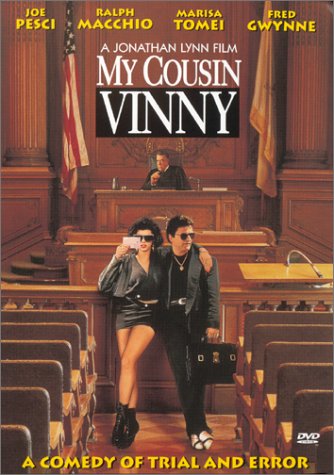
Leo Zanchettin, Prosecuting Attorney

VinnyWell, it’s that time of the year again—the beginning of school and its attendant Rite of Introduction. That’s when you get to meet your kids’ teachers and size them up. Are they the type who live solely by the rules and standardized tests? Are they the kind who have high expectations for their students (a good thing), but don’t know how to help their exceptional students meet those expectations (a not so good thing)? Are they the kind who will look at you like you have two heads when you tell them that your child has an autism spectrum disorder? Will they be quick to respond to your e-mails and questions? Or will you have to pry it out of them?

It’s also the season for IEP meetings. Those wonderful exercises in diplomacy, tact, and tongue-biting. Those opportunities to do penance for your past sins and to try mightily to avoid any future sins.

A Successful Pre-Trial Hearing.

I’ve been thinking about IEP meetings a lot recently, because we have a big one coming up in a couple of weeks. It’s for our fourth child, who is entering third grade this year. Last February, we had a pretty tense gathering with his IEP team at school, when we requested that he be tested and formally recognized as being on the autism spectrum. After a ninety-minute “discussion” on the issue, Katie and I prevailed, and the process of testing him was put into motion.

To this day, I don’t know what turned the tables. For the first hour, I was sure we were going to be denied. But then out of nowhere, the assistant principal began passing out consent forms. Katie thinks it had something to do with the fact that I used the word “irresponsible” in describing the administration’s response to my son’s needs, but I’m still not convinced.

Anyway, the school took all the time it could in conducting the tests, so we couldn’t meet before the end of the school year to discuss the test results. So now we are gearing up for the very important get together, when the school will either agree with us and formally designate him as needing ASD services, or they will give some new variation on the standard line: “he seems fine to us.”

I’m not too worried this time. We’ve got enough evidence from the school’s own testing as well as diagnoses from our therapists to win the day. Granted, schools can be pretty clever when it comes to finding a way out of these things. But we’re getting familiar with the tactics and are learning how to counter them. This is, after all, the third time we’ve been down this road.

I Hate It.

But here’s the thing. I hate these meetings. And not primarily because I have to deal with a skeptical, reluctant team of educators and administrators. What I hate more is the fact that I have to convince them. I have to take them by the hand and walk them through our all the aspects of our son’s ASD.

I have to rehearse every “academically relevant” way in which his disorder manifests itself—including the melt downs over homework and the inability to read social cues and the sometimes tragic, sometimes comical things that come from this inability.

I have to become something of an NSA agent taping his conversations and culling through them to find the evidence of his uneven pragmatic language skills.

I have to pore over all of his testing data, highlighting every deficit so that I can show how it relates to his ASD and how it will affect his ability to move through the curriculum.

I have to give special emphasis to his challenges and deficits and defects (God, I hate that word). When a teacher says something like, “But he’s so cute and charming,” I get to agree, but I can’t dwell on his good qualities for too long. I have to get right back to his needs.

In other words, I have to build a case against my own son, sort of like the way a prosecuting attorney would build a case against a criminal. Because the school will hang on to any positive inkling about him and use it to deny him the services he needs.

That’s what I hate.

Because he’s such a good kid. He’s smart. He’s sensitive. He’s energetic. He’s loving and kind. He’s got the brightest light in his eyes and the liveliest spring to his step I’ve ever seen (yes, he’s a toe-walker). Here he is, my own flesh and blood, and I have the singular privilege of telling a group of low-level bureaucrats everything that’s “wrong” with him.

A Smile on My Face and a Pit in My Stomach.

What’s not to hate?

But we do it, as we’ve done for two of our other children. As we’ll likely have to do for two more. We do it because we want them to get the “free and appropriate public education” that is their right by law. We do it because we want them to be given a fair chance to learn and grow and develop and make a positive contribution in a world that can seem so alien to them. We do it because we love them too much to let them or their school think that just squeaking by is good enough.

So there I’ll be in a couple of weeks, patiently and carefully building a case against my own son. I’ll do it with a smile on my face and a pit in my stomach. And I’ll be praying the whole time that I not lose my cool. Because I want what any parent wants: the best for my kid.


Autism Blues Celebrates 1000 Ausome Things #AutismPositivity2013

autismpositivityflasblog7

So here we are at the end of another Autism Awareness/Acceptance Month. This year, I discovered this really interesting site. It’s a “flash blog” called Autism Positivity. I’m guessing that a flash blog is something like a flash mob. It appears out of nowhere, does something really cool, and then disappears. The goal of this flash blog is to present 1,000 pieces from people touched by ASD—pieces that celebrate the positive side of the ASD constellation.

So what’s “ausome” about being an ASD dad? Simply put: my family.

• First, there’s my oldest, a thirteen-year-old boy with PDD-NOS. Socially, he’s catching up with his peers. He’s beginning to find his “tribe” in the heartless scrum that is middle school. He has a quick wit and a nimble mind. He also has a rich vocabulary. So what if he sometimes can’t distinguish between the literal and figurative speech some of his friends use? It’s helping him learn the ways of that alien species, the neurotypical adolescent.

• Then there’s my twelve-year-old daughter. She is as aspie as they come, and she knows it. And she owns it. And she uses it to her advantage as often as we’ll let her. She can retreat into her own rich, private world for hours but still come out of herself when she sees the need. She clearly marches to her own drummer, but she is beginning to show that she “gets” where her brothers and sister are at. Plus, she has my mother’s smile. What’s not to love?

• Then comes my nine-year-old son, whose Aspergers reminds you of Mozart or Albert Einstein. Intellectually, he’s got enough wattage to light up the Manhattan skyline. He can’t stand to wear denim jeans (“They hurt!”), and he is never happier than when he’s on the computer building new worlds in Minecraft. A passionate soul, he has an exaggerated sense of justice, taking deep offense at every joke or slight. But that same passion can fuel him for hours as he builds complex Lego structures without a blueprint or develops a new outside game for his younger siblings to play.

• Next up, my seven-year-old son, who has high-functioning autism. He has the brightest smile in the universe and the sweetest disposition—when he’s not melting down. And when he does melt down, he recovers with amazing speed and is very quick with a repentant hug and heartfelt words of contrition. He doesn’t quite know how to make friends on the playground yet, but it doesn’t bother him. He’s content just to swing on his own, staring into space dreaming his dreams.

• Then there’s my five-year-old little girl, who has ADHD and may well be aspie. She’s an impish little spitfire of a thing. Some might call her restless or easily distracted. I call her Little Pip because she’s always hopping around. A daddy’s girl from the day she was born, she loves nothing more than a warm cuddle or a kiss on the cheek. What does she dislike? Clothing tags. Hates them with a passion. Now if only I could get her to look me in the eye!

• Then there’s the youngest, a four-year-old boy with PDD-NOS. He too is perpetually on the move—except when he decides to “plank.” He is extremely passionate about Angry Birds—so much so that he will play the game with any projectile he can find. Including his dinner. Which, of course, cannot be eaten sitting down. He is very good at mind-blindedly annoying his siblings. Or his mom. Or his dad. But he often gets a pass, because he does it with such a broad grin that we tend to melt.

• Finally, there’s my wife. (No, I’m not going to tell you her age.) She’s not on the spectrum, so she’s not officially “ausome.” But it doesn’t matter, considering how awesome she is. Day in and day out, she lays down her life for her kids and never complains about the work. No regrets. No recrimination. No remorse. Just a lot of love and a dogged determination to help our kids become the best version of themselves possible. A psychologist friend once told me that raising one special-needs kid is about as demanding as raising three neurotypical kids. So there’s Katie, raising the equivalent of 18 children, and doing it with nothing but grace, wisdom, wit, and energy.

So that’s what’s ausome about ASD. It’s funny, but because we live and breathe this stuff every day, we can’t always tell when our kids are being aspie or being just plain kids. We simply don’t know what neurotypical looks like!

But that’s probably the biggest blessing of all. The labels don’t matter. What matters is the love. What matters is enjoying our kids for the wonderful constellation of gifts and challenges each of them has. What matters is knowing what every dad should know: that to touch your child is to touch heaven itself.

Dude!

Take a look at this story about an aspie fellow trying to survive a conversation with an alien species—in this case a neurotypical alpha male. It’s really quite entertaining, but it also gives a glimpse into all the work that folks on the spectrum often have to put into supposedly normal, everyday interactions. If only the exchange had been videotaped!

The Call of the Mild

Clark Kent

The most recent estimates from the CDC tell us that 1 in 50 school-aged children are on the autism spectrum. That’s a considerable jump from the 2008 estimate of 1 in 88 children. Which itself was a huge jump from 1 in 150 in 2000.

So what gives? A raging epidemic? Not really—at least not this time around. It seems that a major reason for the jump is the CDC’s new method of data gathering. The 2008 number of 1 in 88 is based on a survey of clinical records of 8-year-old children in only 14 states. But the new numbers are derived from a national phone survey of parents of children aged 6-17.

That’s a lot of changed variables, so the numbers are bound to be different. Not to mention, the latest study reports a large increase in older children (ages 14-17) who were not previously identified as being on the autism spectrum now receiving a diagnosis—a sign that increased awareness is leading to increased diagnoses.

Then there’s this difference, which really grabbed my attention: One of the largest increases in reported cases is of children shown to be on the less severe, more mild, end of the spectrum.

This is probably an apt description of my ASD kids. They’re verbal. They score pretty high in intelligence testing. Their social deficits, while real, don’t tend to be crippling (well, maybe sometimes). They have mild forms of ASD.

Here’s What Mild Looks Like

But just what does mild look like? Here are a few pictures.

• Mild is the adolescent girl who, in the throes of a melt down, spits a mouthful of her half-chewed dinner at her father.

• Mild is the seven-year-old whose reaction to even the smallest disapproval or conflict from his parents borders on global thermonuclear war, complete with high-pitched, spine-tingling screams.

• Mild is the four-year-old who, if the conflict between what he wants and what he needs to do gets too intense, goes stiff as a board and refuses to talk.

• Mild is the nine-year-old who comes home crying, convinced that he’s a complete failure because he can’t understand why his classmates don’t want to play dodge ball according to his unique rules.

So while it is good news that the increase in diagnoses is for kids on the mild end of the spectrum, observers need to understand that mild ASD is not the same as a mild head cold. It’s hard. It’s painful. And it doesn’t go away.

Mild, but Significant, Improvements.

Something else about this term, “mild.” The fact that my kids are doing as well as they are is a testament to the benefits of intervention and education.

My oldest, for instance, has come so far that a general psychologist—one not trained in the intricacies of ASD—wonders if he is on the spectrum at all. Of course, this is highly unlikely, seeing how the school psychologist, the psychiatrist, and our ASD psychologist all stand by their diagnoses. Still, it’s a huge relief to see this kid overcome some of his social deficits and learn how to deal with many of his sensory processing challenges. And there are times when we can’t tell whether what we’re seeing is ASD or just ATD—American Teenager Disorder.

The there’s our youngest. We caught him early—around 18 months—and he has been receiving speech and pragmatic language therapy for nearly two years. He has made significant headway in his social skills, and some of his sensory problems have begun to diminish. Still, a day doesn’t go by without Katie and me looking at him, then looking at each other, and sharing an all-too familiar sigh.

What Works?

Yes, therapy works. Katie and I can attest to the fact that our kids were not always as manageable as they are now. That’s because, in part, we know what we’re doing now—at least more than we did when the first diagnoses were handed down four years ago. Using the techniques like cognitive and dialectical behavior therapies, we are learning how to handle, and sometimes even prevent, melt downs. (We don’t always do well, mind you, but that’s a different story.) We’re teaching our kids how to understand their peers. We’re showing them strategies for dealing with the stresses they feel just living in a neurotypical world.

Through bitter experience, and thanks to a lot of help from coaches, we are also getting much better at advocating for our kids in school. And the older ones are even beginning to learn how to advocate for themselves.

We also have not shied away from medications if we think they can help manage some of the symptoms of ASD. I’m talking about antidepressants, ADHD medicine, sleep aids, and the occasional anti-psychotic. Every now and then, we cringe at the thought of the chemicals our kids are ingesting. But then we think back to what they were like before, and we relax.

Beating the Odds?

It’s a good thing, every now and then, to chart the growth our kids have made. But we both know that this doesn’t necessarily mean that they’re being cured. In fact, a recent study showed that while it is possible for some people on the autism spectrum to recover to the point that they lose their diagnosis altogether, it is still pretty rare, and it never happens without years of intensive therapy.

That’s what we’re working toward, even though we know it may never happen. It’s why I make the fifty-mile round trip journey to our therapist twice a week. It’s why Katie has read close to twenty books on ASD and its treatment. It’s why we are in weekly contact with our kids’ teachers, guidance counselors, and school administrators. It’s why we don’t have a social life—or much of a life at all. And it’s why we keep working with our kids, never excusing them or letting them off the hook. They have made good progress so far. But they have a good way to go if they want to beat the odds.

So the next time you hear about mild autism or mild Aspergers, don’t write it off. Usually, there’s a lot going on behind the scenes—a lot of heartache and anxiety. A lot of hard work and uphill climbing. A lot of praying and prodding. A lot of two steps forward, one step back—and sometimes the other way around. But it’s all worth it. We ASD parents know our kids have huge potential, and we won’t rest until we see them realize it.

O Necessary Sin!

Earth


A few days ago, I came across this post on another autism parent’s blog, and it got me thinking, again, about the question of God and his role in stuff like this. The author is an associate pastor in a nondenominational church in Oregon. He has five kids, one of whom is on the severe end of the autism spectrum. In the post, he talks about how the Christian faith is a “lousy force field.” He says that being a Christian and belonging to a church really doesn’t insulate you from all the bad stuff that happens out in the real world. “It’s a lie,” he says. “We are living neck deep in the stink of life just like everyone else.”

Exactly. That’s our experience as well. Believing in God, going to church, having a regular prayer time, etc. None of it guarantees you a problem-free life. It may help you face the challenges when they come. It may help make you more peaceful, more patient, and more trusting. But it won’t shield you from the bad stuff. It should help protect you from sin and all the bad stuff that is the direct result of your own personal sins. But it won’t shield you from the bad-things-happen-to-good-people stuff.

I’ve got to hand it to this fellow for being honest about how broken he feels by his son’s situation. He doesn’t try to put a brave face on everything because he doesn’t want to give Christianity a bad name. He’s clearly been through the wringer, and he’s not going to deny it.

I also want to commend him for his determination. He hasn’t given up on God. He’s still out there helping people. He’s still pouring himself out for his church and leading a congregation in prayer—all with the goal of bringing them in touch with God. Really inspiring!

When Bad Stuff Hits.

But what this post got me to thinking about, again, was something I hinted at in a more recent post of mine: My kids on the spectrum have a prophetic role to play in this world. And for that reason, I am beginning to think that their ASD is part of God’s plan—for them and for the people whose lives will intersect theirs.

Here’s the thing: We want our children to be perfect. We want them to have good health, a good education, a bright future, no real problems or major roadblocks on the way to happiness.

But then autism happens. Or cerebral palsy. Or mental retardation. Or childhood diabetes. Or a host of other genetic, uncontrollable diseases and disorders. Suddenly the dream of a near-perfect life is gone. Our hopes are shattered. We worry constantly about our children’s futures. Their present is a long list of treatments, medical bills, and huge adjustments to everyday life. What happened? We had such beautiful plans, and now they seem smashed to pieces.

Quite often, too, we begin to wonder where God is in all of this. How could he let this happen to our innocent little child? What kind of Father is he anyway? I know a thing or two about fatherhood, and in no way does this fit into my definition. Many people, hurt and disenchanted, turn away from God. Others try to comfort themselves with analgesic statements drawn from inspirational posters and Chicken Soup for the Soul books. Anything to help reconcile our plans and dreams with the far more difficult reality thrust upon us and our children.

Frying Other Fish.

But what if this was part of God’s plan all along? What if this was part of the way he dreamed our children into existence from the start? After all, the Bible tells us that every hair on our heads is counted (Matthew 10:30). It tells us that God knit us together in our mother’s womb, and that every day of our lives is already written in his book (Psalm 139:13, 16). Drawing on a particularly memorable description of the act of conception, it tells us that God poured us out like milk and curdled us like cheese (Job 10:10). If he was so intimately involved in our children’s creation, how could something like this slip in unintended?

Actually, it’s not too hard to imagine that God had a hand in this. His ways aren’t our ways, are they? We may want a comfortable home in the suburbs, good schools, and a promising career for our kids, but I suspect that God has other fish to fry. Not that he has anything against the middle-class American dream, but I think his sights are set a good deal higher. He seems to be much more interested in a world marked by love, compassion, justice, and mercy. He seems to care more whether the people he created look and act like his Son—a poor carpenter who didn’t have a place to lay his head.

So how is he going to get this to happen? Certainly not by giving everyone the same homogenized, perfect, problem-free lot in life. If there were no poor, there would be no generosity. If there were no sickness, there would be no compassion. If there were no hardship, there would be no growth in character. There would only be one big, bland, barrel of blah. Yes, God wants to give us good gifts. But the gifts and the goodness he has in mind far outweigh the trinkets and gewgaws we often ask for.

No, there has to be sickness. There have to be disorders. There have to be natural injustices like autism, down syndrome, and MS. It’s all part of the “happy fault” and the “necessary sin of Adam” that we Catholics exult in at the Easter Vigil.

So no, life isn’t fair. It isn’t supposed to be fair—at least not according to our standards. It’s about how we take what God gives us and use it to build his kingdom.

A Royal Calling.

That’s why I think kids with special needs have a valuable, prophetic role to play in this world. In a way, they are God’s word to us. They call us to a deeper, more meaningful life. With their innocence and vulnerability, they invite us to become more than the collection of our possessions, our education, and our ambitions. They call us to become Christ for them, even as we see Christ in their eyes.

The pastor I mentioned above ended his post with these words:

I don’t know whether Jackson will be fully restored in this life or the next, but he will be restored. It will happen. That means my son and others like him—the ones who for centuries have been forgotten, bullied, mocked, and thrown away—they will be heralded like Kings and Queens, and celebrated like rock stars.

While I pray every day for my kids’ healing (and I’m not always sure what that means), I get the sense that their full restoration won’t happen this side of eternity. They have too important a part to play. But I do believe that in this life they will be “heralded” like the royalty they are—if by only a few people. In my heart I try to do that every day, and I firmly believe that they’ll find other people who will treat them with just as much honor and reverence. People who will love and accept them for everything about who they are—not in spite of it.

I know that’s how God looks at them.