
Different, Not Less

Grandin
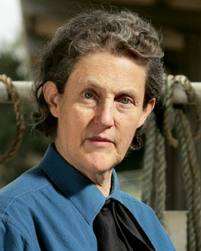
Danes 1So we saw the HBO movie Temple Grandin this weekend. For those who don’t know, that is the name of a professor of animal science at Colorado State University. Her designs for slaughterhouses have revolutionized the beef industry, and she is an outspoken advocate for the humane treatment of cattle. She has become a household name among ranchers and cattle handlers, and her book, Thinking in Pictures, is a best seller.

Temple Grandin has autism. She didn’t speak until she was four. She was expelled from elementary school, and bullied in high school. She hates being touched by anyone, even her mother. She eats only yogurt and Jello. She insists on wearing cowboy shirts and jeans everywhere she goes. She can’t stand loud noises. And she developed a special “squeeze machine” that she used for decades when she would feel overwhelmed or close to melting down.

Katie and I had seen the movie before, but we wanted our older kids to see it this time. We wanted to expose them to someone on the autism spectrum who has made a successful life for herself, someone we consider a true hero in the world of ASD.

The kids enjoyed the movie, and our two oldest were able to see some of their own lives in this woman’s story. But honestly, I think Katie and I learned more than they did. We have been working so hard lately on getting the kids through school assignments, helping them work on their social skills, and managing melt downs that it was good to be able to step back and get a big-picture perspective. Watching the movie’s portrayal of some of the emotional toll that ASD takes on a family was difficult at times, but the tough stuff was overshadowed by the portrait of a young woman who pushed through numerous deficits to find her way in the world and make a real contribution. It also portrayed a mother who simply would not give up. “Different, not less.” That’s how she constantly described her daughter to skeptics and scoffers. She held on to the vision of her girl making it through college and living independently, pursuing a career, and she imparted that kind of determination to her daughter.

This may sound like a feel-good, moral-of-the-story type of movie. And to a certain degree it is. But what it did for me was remind me that all the work we’re doing for our kids has a purpose. It can be so hard just getting through a day sometimes that I can forget how much potential these kids have. The tunnel vision that results from daily battles can make me lose sight of the future that is available to them—a future that is just a bright and promising as any neurotypical child.

You see, psycho-educational testing has shown that our kids are all very bright. There’s not a dim bulb among them. Some are absolute geniuses, in fact. But their ASD can make it hard for them to want to test their limits. It can keep them locked up in themselves. And it puts them at a disadvantage in a school system that, despite its high ratings, still relies far too much on a cookie-cutter approach to education. But watching this movie again helped me see that my kids really do have a lot to offer. It’s bottled up inside, and it’s up to Katie and me to find ways to get it out in the open. It’s also up to us to convince teachers and administrators that they’re worth the effort. (Believe me, we’ve had to deal with more than our fair share of naysayers. And something tells me we’re not done with them yet.)

But the other thing the movie did was to help me see that it’s not all up to Katie and me. Yes, we have a ton of work to do to help them face a world that won’t readily understand or accept them. But our kids are also capable of discovering their own passions and chasing them down, if we can just set them on the right footing. I am a worrier by nature; I’ve always known that. Sometimes in my worrying and trying to get everything just right, I can forget that my kids are making their own plans and developing their own visions quite independent of me. And that’s okay, as long as Katie and I can give them the foundation they need to pursue these visions—and the skills they will need to live in a world that can seem so alien to some of them.

Anyway, here’s a link to the final scene from the movie, where Temple and her mother attend a conference on autism, and Temple gives an excellent summary not only of some of the major challenges that people with ASD face but also of her mother’s hard work on her behalf. It’s really quite touching to see the different emotions that play across her mother’s face as Temple unwittingly gives a huge, long shout-out to everything her mother did for her. Watch it, and you’ll see why this is the scene never fails to put a lump in my throat.

Yes, our kids are different. At times, very different. Quirky with a capital Q different. But they are not in any way less. That’s something I have to keep telling myself. But it’s also something that they’re beginning to tell me.
Solidarity from Rome

It took me a couple of days to find it, but here it is: the Vatican’s message to families touched by autism. On every April 2, World Autism Awareness Day, the Pontifical Council for Healthcare Workers publishes something like this. On one hand, we can read these official statements as little more than that—official, almost boilerplate language that can be applied to any other disability. All you have to do is swap out “autism” with “cerebral palsy” or “depression” or some other brain disorder. Or we can read these messages as words from the heart, intended to offer something personal to the ones affected by this disorder.

I choose the second option. And not just because I happen to be a Catholic. When I read Archbishop Zimowski’s words, I saw that he really does get some of the challenges of ASD and of having a child on the spectrum.

More Than Just Loss.

For one thing, he spoke of the feeling of “loss,” but also of “amazement,” that parents of ASD children can experience. And that strikes me as right. Hearing the diagnoses for my kids—one after another after another—was like a stab in the heart each time. Especially when we got the news the first time, I was stunned. “Loss” was definitely the first thing I felt. The sense that this beautiful son of ours had lost his future. The sense that my wife and I had lost any hope for having a full relationship with him. The fear that he would lose any opportunity for an independent life. And, yes, the fear that we had lost our future as a happily retired couple with no worries about our grown children.

But at the same time, there was a sense of amazement. It didn’t happen all at once. But over the next few days, as I got used to the word “autism,” I was amazed at how beautiful, loving, and genuinely happy my boy was. (Mind you, he was only three years old at the time, and every kid at that age is really cute. But still. . .) I was amazed at how much more my heart went out to him. I was amazed at how deeply he could respond to me, even though he had yet to speak a word and at times appeared lost in his own world. I was amazed that, even in the midst of my loss, I never thought it was completely hopeless. Somehow I knew that God had our boy in his hands and that a path would open up before him over time. And slowly, through therapy, our own understanding and advocacy, and a growing awareness about ASD in the broader world, I am beginning to see this path—for him as well as for his other ASD siblings. Finally, and most important, I am amazed at how much these kids show us the face of Christ.

Solidarity.

The other thing that Archbishop Zimowski speaks about is the sense of solidarity that the Church feels with people on the autism spectrum and their families. It’s a pledge to walk with us, alongside of us as brothers and sisters. Not in a patronizing, pitying way but as our peers who see the value, the beauty, and the vital role of those struggling with this disorder. This, I think, is one of the greatest gifts that the Church can give to families like ours. In a world that tends to assess people’s worth based on their material contribution to society, the Church is telling us that our kids offer something just as important, if not more so. I wrote about this just a few days ago, and it has been sticking in my mind ever since.

The good archbishop knows he cannot offer expert help. He knows he doesn’t understand our challenges half as clearly as we parents do. But he also knows that we don’t expect that from him, or from the Church as a whole. We’ll find the experts elsewhere. We’ll find the clinical help we need from, well, clinicians, not priests or bishops. As Peter told the lame man, “Silver and gold I do not have, but what I have I give to you: In the name of Jesus, stand and walk.”

We may not find therapy in the Church, but we will find acceptance. We know we will find people who can see our kids in the same way they see every other child: as a gift and a mystery. Of course, this doesn’t always happen. No parish is perfect, after all. But that’s what makes these words so much sweeter. We know we belong. We have the words to prove it. And we have the Spirit behind the words to remind us whenever we feel otherwise.

So on behalf of Katie and my kids, I’d like to say “Thank you” to Archbishop Zimowski for his message. I’d also like to say “Thank you” as well to Pope Francis, who in just the few weeks since his election has done so much to show the world what solidarity really looks like. And I’d like to say “Thank you” to every priest and parishioner who has ever welcomed us and shown us the love of Christ.

A Different Kind of Card Game

A couple of days ago, I wrote about my 12-year-old girl’s hour-long search for her purse—a quest that made her late for school and me late for work. Well, I want to follow up with something that happened as I drove her to school that morning.

As we backed out of the driveway , she picked up my wallet and began rifling through my cards: driver’s license, insurance ID, business cards, credit cards, etc.

“What are you doing?” I asked her.

“I’m reorganizing your cards.”

“Why? They were perfectly fine the way they were.”

“I know. But this helps me work out my anger.”

Pressure Valves.

I didn’t pursue it right then and there. I was just glad we were heading in the right direction without any major incident. But later that evening, I asked her about it.

“I was angry that the purse was right there all along, and I passed by it about thirty times without ever seeing it,” she told me. “I figured that if I could mess up your cards and put them back in the right order, I would feel better.”

Evidently, it worked. She had a pretty good day at school—which is to say that Katie had to field only one anxiety-laden phone call from her. She did okay on her homework, and the evening went off without any major melt downs.

If that’s all it took for her to get right with the world, I was more than happy to oblige. Heck, I’d stack my wallet with a whole deck of playing cards!

While this kind of behavior is quirky, it’s not uncommon for my daughter. Actually, I’m glad to see her doing it. It’s a lot better than other habits she has had over the years. For instance, when she was a very little girl, she used to do what she called “belly exercises”—a rhythmic motion, akin to dry humping—for nearly 20 minutes at a time in the middle of the afternoon. We never knew what to make of it, especially when she would emerge from the exercises sweaty and out of breath. But our pediatrician dismissed it, so we never followed up. (We have since changed to a doctor who actually knows what ASD is and has experience working with kids on the spectrum.)

Then there was the phase when she had to take all of her Littlest Pet Shop dolls to school in a purse so that she could reach in and touch them when she was feeling stressed out or lonely. Or the habit, which persists, of taking a suitcase filled with her Webkinz plush animals whenever we go on a day trip or a vacation. Oh, and she still plays with water. She’ll dunk her face in the bathroom sink or fill up a small hole she dug in the back yard so that she can squish her feet in the mud.

Defusing by Diffusing.

Anyone who has a child on the autism spectrum will identify with these types of behavior. They’re all the unique ways ASD kids will diffuse tension. When they’re not melting down, that is.

What’s there to diffuse? Plenty. There’s the tension that comes from sensory processing glitches. Most of us don’t get bothered by things like fluorescent lights, the sound of traffic, or other sensory input that is part of our everyday, noisy existence. But many kids on the spectrum are highly attuned to these things. One of my kids, for instance, can’t stand the feel of denim. The only pants he will wear are sweats—and not the shiny kind. There’s also the tension that comes from having to deal with people. Social communication can be hard on ASD kids, because many of them have a hard time reading the subtleties of body language and vocal inflections. It’s like deciphering hieroglyphics, and it’s exhausting. And finally, there’s the tension that comes from just plain knowing how different you are. As I mentioned in an earlier post, the co-incidence of ASD and depression or anxiety is very high—mainly stemming from this sense of otherness.

So with all of these factors at work, it’s no wonder that folks on the spectrum try to find ways to relieve the pressure that builds up. Temple Grandin has her squeeze machine. Bill Gates rocks back and forth. A young man in Great Britain carries a well-worn plush lion around with him. And my little girl takes mud baths and reorganizes cards.

Here’s what I like about what I saw in the car Tuesday morning. My daughter found a pretty creative way of acting out without, well, acting out. This little episode also shows how intelligent and insightful she can be. She knows she has Aspergers. She knows she’s different. She knows she has challenges that other kids don’t have. And while it can make her sad and frustrated, it has also moved her to find ways to deal with it. I also like the fact that she is experimenting with strategies that don’t get her in trouble or that don’t mark her out for teasing or bullying from her peers. And finally, I like the fact that she’s doing this on her own, without any coaching from her parents or her psychologist. Mind you, this doesn’t happen all the time. There are many times when she will act out more dramatically and more emotionally. But the fact that she worked this one out all on her own makes me smile. It tells me that she will find her way.

Now, if I can just get her seven-year-old brother to stop staging mock battles with his little brother when he’s uptight. Or her nine-year-old brother to stop sucking his thumb. Or her four-year-old brother to stop throwing things all around the house. Or her big brother to stop chewing his finger nails down to the cuticles. Baby steps, Leo. Baby steps.

A Missing Purse, A Crisis Averted, and a Lesson Learned

Today is World Autism Awareness Day. It’s the one day out of the year when skyscrapers and other monuments around the world are bathed in blue light as a way of raising awareness of the growing epidemic of autism spectrum disorders. And our home will be no exception. After work tonight, I’m going to swap out the light bulbs over our front porch and on our garage doors so that our house will be set apart by a soft blue hue all month long.

So it’s only appropriate that I started out Autism Awareness Day with a little episode that made us aware of the challenges of ASD—and that gave us a brief lesson in how to help.

The Case of the Missing Purse.

My twelve-year-old daughter, who has Asperger syndrome, wouldn’t go to school this morning. At least not until she found her purse. Why? Because her purse contained her spare set of earrings. And she was deathly scared that the ones in her ears would start bothering her in the middle of the day, and she wouldn’t have anything to replace them with.

Never mind that her earrings were perfectly fine. Never mind that her ears were perfectly fine. She had got the idea in her head that something bad might happen, and she couldn’t let it go. Typical aspie behavior: Your brain gets stuck on something, and it’s nearly impossible to get it unstuck.

Lord knows I tried this morning. I looked in all the usual places. Nothing. I looked in all the unusual places. Nothing. I suggested even more unusual places where my daughter could look. But she had become so frustrated and anxious at the thought of not finding her purse that she had curled up on our bed, tense and sobbing. I tried reasoning with her. “Why don’t you go to school, and Mom and I will keep looking. When we find it, we’ll bring it to you.”

“You don’t understand. I can’t go until I have that purse!”

“But you’ve already missed a lot of school, and you have exams this week.”

“I don’t care. I need that purse! I won’t go without it!”

A Fresh Start.

Not wanting to have two kids tardy, I took her older brother to school and came back home. Katie, in the mean time, took on the task of getting the other kids ready for elementary school—and dealing with a couple of minor ASD-related crises from them.

When I got back, I laid down next to my daughter and stared at the ceiling for a couple of minutes. “Let her get used to me being here. Just breathe. Don’t push her too hard, or she’ll melt down, and then all bets are off.”

After a short while, she uncurled a bit, and began verbally retracing her steps from the last time she had the purse. It’s something Katie and I had tried to get her to do before, but she had to decide to do it herself. “Okay,” I said. “Let’s look around all those places.” This time, she actually got up and began searching on her own—and far less agitated, too.

It took nearly an hour, but we found the silly thing. It was one of those “hidden in plain sight” things that makes you embarrassed you hadn’t seen it earlier.

Problem solved. Crisis averted.

A Lesson to Be Learned.

But here’s the really quirky part. Once she found her purse, she immediately changed her earrings, put the purse down, and gathered her books. “I’m okay now,” she told us. “I can go to school.” No spare set. No need to carry the purse. No fear of irritation or infection. She had forgotten why she needed the purse. Her brain had gotten so stuck that she didn’t even know what the initial problem was!

Neither Katie nor I wanted to argue with her at this point. We were just glad that the episode didn’t escalate beyond general anxiety and obsessive thinking.

We were also glad that we were able to stay relatively calm—a key ingredient in helping her avoid a full-scale melt down. Episodes like this don’t always end so pleasantly. Especially if we parents lose our cool.

So on this day when advocacy groups everywhere are raising awareness, my little girl contributed to the cause. She made us aware of how unpredictable ASD can be. She told us to expect the unexpected. And she showed us that a little kindness and empathy can go a long way.

If only the rest of the world could learn this lesson!

Why We Cry. . .

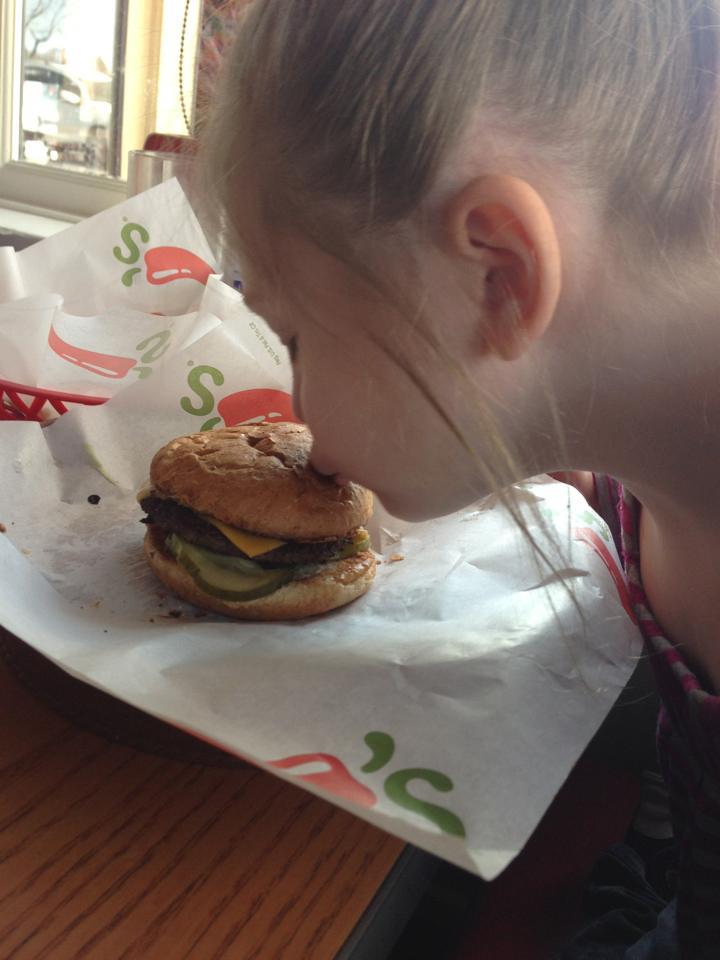
kiss_cheeseburgerRecently, a friend at work sent me this story about a girl with autism who was treated very well by the staff of a Chili’s restaurant in Midvale, Utah. Apparently, the Facebook post that this story was based on has gone viral, with nearly 50,000 comments. And I can see why. If you have one or more kids on the autism spectrum, you don’t expect people to go out of their way to help you or your kid. Instead, you get used to the baffled stares, the cluck-clucking, and the occasionally mean comments about your children and your parenting skills—or lack thereof.

For Katie and myself, whenever we contemplate going out to dinner, we have to include a few questions that most families wouldn’t bother to ask. Questions like: “Is the place too dark? Too bright? Is it noisy or quiet? Is there plenty of space between the tables? Do we know if the staff is flexible? Is there more than one way out in case of a melt down or in case one or more of the kids needs to take a break and get some fresh air?” So as you can imagine, we don’t go out that much, and when we do, it’s usually to our local McDonald’s, where many of the people already know us.

Anyway, as I said, I read this piece about a week ago, and it kept popping up on my Facebook account. Friends messaged me about it, or posted it to my wall, or shared it on their own walls. Clearly, it moved a lot of people. And one of the best reactions to this story I have read comes from a man in Canada who has a son with autism. His name is Stuart Duncan, and he writes a blog called “Autism from a Father’s Point of View.” Check it out, and see what you think.